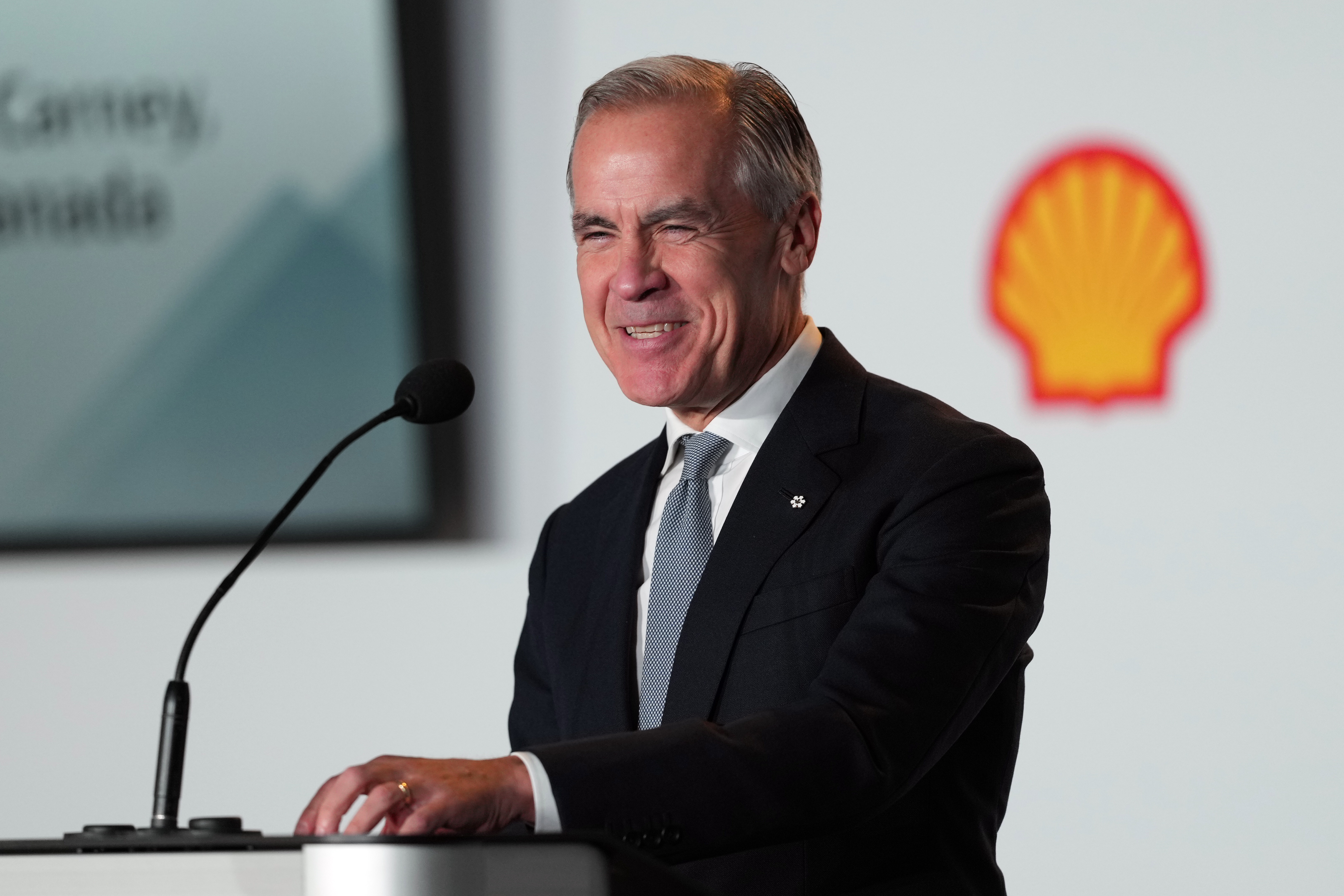
Canada’s first major LNG export terminal plans to double its capacity

VANCOUVER, British Columbia (AP) — The multinational owners of Canada’s first large-scale liquefied natural gas export terminal agreed Tuesday to a C$33 billion (US$23 billion) expansion in British Columbia that
will double the facility’s capacity and expand Canada’s exports to overseas energy markets.
LNG Canada said its partners made a final investment decision on Phase 2 of the Kitimat project, increasing capacity to 28 million tons a year. The expansion will add two LNG processing units, another storage tank and an additional loading berth, while building on infrastructure from the first phase, which began exports last year.
LNG Canada is owned by Britain's Shell, Malaysia’s Petronas, PetroChina, Japan’s Mitsubishi Corp. and South Korea’s KOGAS.
Natural gas from western Canada is piped to Kitimat, where it is liquefied and loaded onto tankers for export, primarily to Asian markets. Liquefied natural gas, or LNG, is natural gas cooled to a liquid form for shipping and storage before being converted back into gas for heating, electricity generation and industrial use.
Canadian Prime Minister Mark Carney said the expansion would make LNG Canada the second-largest facility of its kind in the world and create up to 4,000 jobs at peak construction.
“Today’s investment is being made in a different environment: a more dangerous and divided world,” Carney said. “A world where Canada fully values export diversification and the greater sovereignty it confers.”
Carney has made reducing Canada’s economic reliance on the United States a priority as U.S. President Donald Trump’s tariffs and other trade restrictions have strained relations between the longtime allies.
Carney said Canada’s Pacific Coast gives the project an advantage over U.S. LNG exporters, with shipments from Kitimat able to reach Asia in eight to 10 days, less than half the transit time from the U.S. Gulf Coast.
The expansion will also trigger a multibillion-dollar expansion of the TC Energy-operated Coastal GasLink pipeline, which carries natural gas from Dawson Creek to Kitimat. TC Energy said it will add compressor stations and upgrade facilities, nearly doubling the pipeline’s capacity and creating up to 2,100 jobs at peak construction.