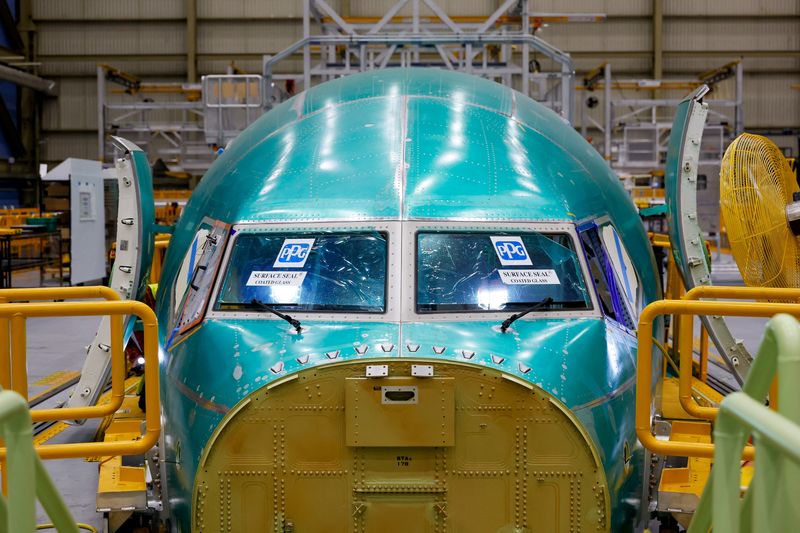
US FAA delays Boeing 737 MAX 10 certification, shares dive 6%

By David Shepardson and Allison Lampert
Sept 28 (Reuters) - The US Federal Aviation Administration said on Monday it will delay certification of Boeing's long-delayed 737 MAX 10 until a newly disclosed
software issue is resolved, the latest setback to the planemaker's efforts to bring the largest version of its best-selling jet to market.
Boeing said on Saturday a software issue affecting certain 737 MAX aircraft could prevent pilots from accessing automated flight guidance during a specific landing scenario. The company said it had informed operators and was developing a software update to permanently address the problem.
Boeing shares fell 6.3% on concerns about further delays to the MAX 10, a key aircraft in Boeing's effort to regain ground lost to Airbus in the lucrative single-aisle market.
"We will be delaying the 10 until we're satisfied that we don't have an issue here," FAA Administrator Bryan Bedford told reporters at an event at Reagan Washington National Airport. He declined to estimate the length of the delay.
Bedford said the software was supplied by GE Aerospace, the jet-engine maker and key Boeing supplier, and suggested a fix could be developed relatively quickly.
"I think in this particular case, due to the focus that's on it, GE may try to get this software correction in much quicker," Bedford said. "Is that weeks, days, months? I don't know."
Despite the bug, pilots maintained control, unlike undisclosed 737 MAX automatic flight control software that caused two crashes in 2018 and 2019, he said.
The FAA said earlier it planned to convene a Corrective Action Review Board to investigate the issue.
“We continue to follow the lead of the FAA as we work through the certification process," a Boeing spokesperson said.
GE Aerospace did not immediately respond to a request for comment.
WestJet, the Canadian carrier backed by Onex Corp and one of the airlines operating the software under review on its 737 MAX fleet, said it had not experienced any in-service issues and did not view the matter as a safety concern.
"We have standard operating procedures and training to mitigate this type of event," the Calgary-based carrier said in a statement.
Alaska Airlines and United Airlines said none of their aircraft currently use the affected software.
United said it is not accepting deliveries of aircraft equipped with the software version under review, while Alaska said it is working with Boeing and the FAA as they evaluate the issue.
(Reporting By Allison Lampert, David Shepardson, Dan Catchpole and Rajesh Kumar Singh; Editing by Joe Brock and David Gregorio)