
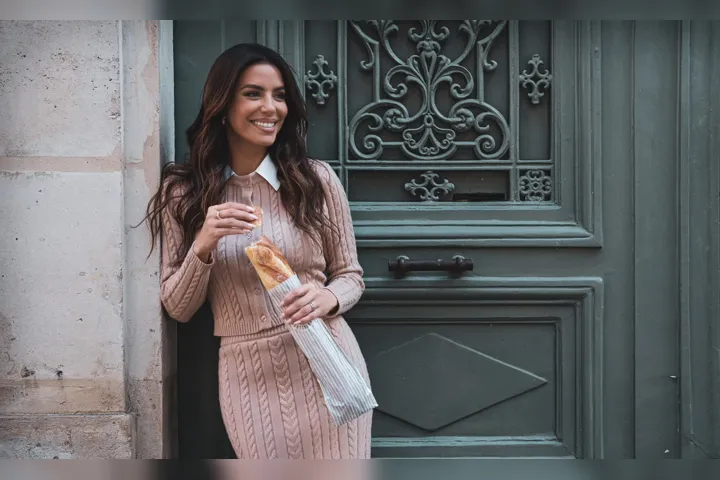
Eva Longoria’s French Connection

•
1 days ago

Click here to read the full article.
Eva Longoria thought she knew France pretty well.
The actress and producer has been traveling to the country regularly for more than two decades. She speaks French. She was married to French American basketball star Tony Parker for three years. “I’m definitely a Francophile,” she says. “In a past life, I was definitely French, because the minute I visited for the first time, 25 years ago, I said, ‘My God, I want to speak French and I want to be here.’”
So it’s not exactly shocking that Longoria chose France as the latest destination for the third season of her CNN travel series.
In Eva Longoria: Searching for France, premiering April 12, Longoria explores the nation’s vaunted culinary heritage and current dining scene across eight episodes and multiple regions, including Provence, Brittany, Alsace, Bordeaux and Burgundy. There’s even an entire episode devoted to delectable pastry and bread in Paris, sampling creations by star talents like Nina Métayer, Cédric Grolet and Mickaël Reydellet of La Parisienne. “This is my dream job: traveling the world and eating. To be able to do it in one of my favorite countries — how can life get any better?” says Longoria.
Longoria — who previously explored the cuisines of Spain and Mexico on her CNN show — speaks to The Hollywood Reporter about what she learned, ate and enjoyed the most while making the latest season.
What are some regions of France that you explored while making the show that surprised you the most?
I had been everywhere in France except Alsace. Alsace is on the German side, which was fascinating and gorgeous. It’s not French and not German, it’s Alsatian. And Brittany — the Bretons are a unique people as well. They’re not so much French and not so much English. They’re Breton. These regional identities are so strong, and that was beautiful to really discover and experience.
What were some distinctive foods from those two regions that stood out?
The winstubs are old, hidden restaurants from World War II, when Germany was occupying France and had to operate in secret to preserve French culture, French food and French wine. And the menus are amazing — usually very similar to each other and with different types of sausages, which you’d think that’s German, but it wasn’t. It’s hard to explain.
And then in Brittany, we got to experience seafood that’s unique to that [area]. The blue lobsters — we actually went diving for them, and they were beautiful. There are only a select few people allowed to fish them because they really want to protect the population.

You took a MasterClass during the pandemic to learn how to make croissants. What was it like meeting some of France’s best bakers and pâtissiers?
The French take croissant-making and baguette-making very seriously. And look, I am so remedial in my croissant-making skills in comparison to them. I was asking, “Does this really matter?” They’d say, “Absolutely, the temperature of the water matters, and where the flour comes from matters.” Every ingredient is highly regulated in the sense that it’s sacred.
I had a lot of fun making baguettes [in France] because the croissant-makers are a little too serious for me. You really don’t touch that recipe.

On your podcast Hungry for History with Maite Gomez-Rejôn, you recently explored the profound influence of chef and restaurateur Auguste Escoffier on not only French cuisine but all of dining. Can you talk a bit about how France shaped how so many people eat?
We owe so much of fine dining to the French. The coursing of a meal, forks, knives, dinnerware, the café, the brasserie, souffle, sommelier, all of it. And then there’s Escoffier [creating] the bible of mother sauces [such as] béchamel and hollandaise. His book [Le Guide Culinaire] is still in every single kitchen I visited, from Michelin-starred restaurants to a scrappy chef in Marseille. Even the rule-breakers would say, “You have to know the rules before you break them.”
The brigade system, how to organize a kitchen, from sous chef to the meat station to the fish station, that came from Escoffier, too. He was in the army and brought that order back to the kitchen. And not just the kitchen, he codified the [front of house] structure: the maître d’, the hostess, the head waiter, the sommelier.

Were there any other regions of France that really stood out for you?
The most surprising thing was Provence. I don’t want to use a negative word because it’s a positive thing, but they have a chip on their shoulder in regards to the rest of the country. Paris and Lyon get all the limelight, but Provence really opens its arms to the rest of the world, so their food has very different influences that don’t follow the rules of traditional French cooking. I remember saying, “Let me guess, you’re going to use butter?” And the chef said, “No, only the north uses butter. In the south, we use olive oil.” And then you think about it, it makes complete sense. And then to really discover the Greek influences and how they settled Provence historically, and that’s where the niçoise salad and olive oil come from. They get very angry that everyone is breaking the [niçoise salad] rules. There is no lettuce in a niçoise salad. Please stop putting lettuce in the niçoise.
Are there chefs who are immigrants to France and redefining what it means to be French?
All of them. But Mory Sacko [of MoSuke] is so worth mentioning. He’s West African, only 33, already a Michelin-starred chef — the most famous celebrity chef in France right now. He grew up in Paris in an Asian neighborhood, fell in love with Japanese cooking, and opened a restaurant that’s a mix of French, West African and Japanese cuisine. He’s just lovely and really defines what it means to be influenced by many cultures, not just your own.

Do you have a meal or two that still stand out from making the show?
In Paris, Le Cheval d’Or, or golden horse, is this French-Asian restaurant in the historic Chinese district run by an Australian-Filipino chef named Hanz Gueco. The menu is never the same, and he had a shrimp toast croque madame that was insane. That’s what I love about this series: It shows you the rules and then shows you who breaks them.
What philosophy do you rely on when choosing projects through your production company, Hyphenate Media Group?
I love to produce with purpose — what am I trying to say, what do I want to evoke emotionally? The Searching for series started with Mexico because U.S.-Mexico relations were pretty strained, and food is a great cultural connector. If people are doing Taco Tuesday and margaritas, maybe they’ll have more affection toward the culture that birthed that.

Are you cooking anything now that you learned to make in France?
I’m making my own baguettes at home now, it’s easier than you’d think. And my own butter. You pour heavy cream in a jar, shake it for 15 minutes, and et voilà, you have butter. Honey butter, garlic butter, salted butter. It’s not quite the same as the butter from Brittany and Normandy, where you can taste the grass and the spring rain, but the process is identical.

What is one meal that still stands out from when you were filming?
In Bordeaux, Vivien Durand at Le Prince Noir is a huge rule-breaker and super innovative. He made this beef with a play on the Bordelaise sauce. And chef Philippe Etchebest [of Le Quatrième Mur] made the best duck I have ever had.

This story appears in The Hollywood Reporter’s 2026 Travel Issue. Click here to read more.