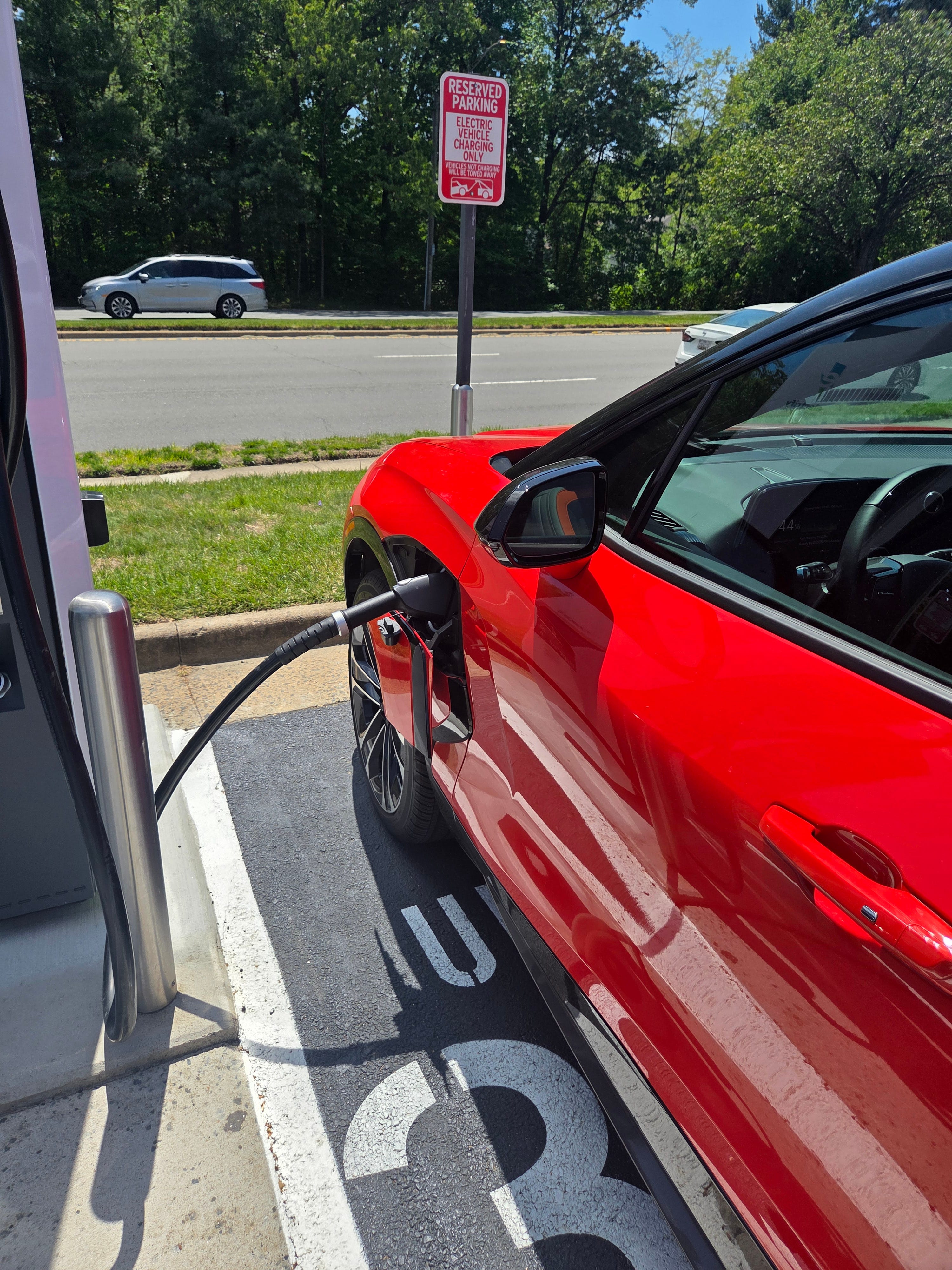
Trump ended EV tax credits. California's replacement is taking off

California has moved to backfill at least some of the lost $7,500 federal electric vehicle tax credit that was killed last year by the President Donald Trump's administration and Congress. State leaders
there said they have given out nearly 12,000 rebates for first time EV buyers in just two months.
California Gov. Gavin Newsom, a Democrat thought to be a likely 2028 presidential contender, said in an Oct. 16 news release "twelve thousand Californians bought their first electric car and said goodbye to the gas pump" since his state started offering $3,750 "MyFirstEV" instant rebate program for first-time EV buyers in August.
"This is what affordability and economic security look like: money back in families’ pockets, good-paying jobs here at home, and an America that’s done letting foreign wars and unstable global oil markets set the price of getting to work," Newsom added. "California is just getting started."
Newsom's comments come as electric vehicles accounted for 6.4% of all U.S. new car sales in the third quarter of 2026, up from 5.8% in the second quarter, according to Cox Automotive. They also come comes as the price of gas in the U.S. averaged $4.29 on Monday Oct. 19, according to AAA. That's up from $3.03 one year ago on Oct. 19, 2025.
Stephanie Valdez Streaty, director of Industry Insights at Cox Automotive, said in a statement that elevated gas prices this year have helped the U.S. EV market find its footing after President Donald Trump ended a popular $7,500 tax credit for EVs that had existed since the end of former President George W in September 2025.
“The third quarter was the highest EV sales volume in a year, and improvement through 2026 suggests the reset phase is largely behind us," she said. "The next stage of growth will be driven by great products, competitive pricing, and automakers that continue to give consumers compelling reasons to make the switch. And high pump prices are likely helping as well. With gas prices well above $4 a gallon, electric vehicles look better than ever.”
With that in mind, the USA TODAY Cars Team took a look at why California is stepping in to replace the lost federal EV tax credits and how drivers there can qualify for the instant savings.
Why is California stepping in to offer EV tax credits?
California is home to the largest percentage of car buyers who opt for electric cars.
According to the Alliance for Automotive Innovation, which lobbies in Washington for most major automakers, EVs and hybrid cars composed more than 21 percent of new light-duty vehicle registrations in California the second quarter of 2026, which is the most recent data the group has made publicly available. California was the only state above 20 percent market share in the second quarter of 2026.
Additionally, carmakers sold 262,649 EVs in the third quarter of 2026, according to Cox Automotive. That means vehicles sold with the help of California's 12,000 EV tax rebate alone accounted for 5% of the nation's total EV sales in the third quarter.
Car makers have lamented the loss of the federal incentive for EVs, and several have slashed plans to build future electric models in light of the shift in the federal government's support for the technology.
California Air Resources Board Chairwoman Lauren Sanchez said in an exclusive interview with USA Today that her state is stepping up to offer EV tax credits because "the rest of the global market is moving toward" Zero Emission Vehicles, despite the backsliding in the level of federal support under Trump.
California's plan came nearly two years after President Donald Trump's 2024 election win, when Newsom pledged, he would step in to offer electric vehicle tax credits to consumers if Trump followed through on campaign promises to end the popular $7,500 federal credit. Trump pushed legislation through Congress that ended the federal tax credit on Sept. 30, 2025.
Who qualifies for California's EV rebates?
California's EV rebates are limited to residents of the state who have never purchased an electric car before.
The rebates are available to car buyers at all income levels, but the new EVs have to cost less than $50,000, according to the law authorizing the rebates that was signed by Newsom. The price cap for used EVs will be $25,000, according to the law.
There's a big catch, though: The California law states that there will be no price limits on rebates offered for cars made by "California-headquartered zero-emission vehicle companies," which is a big boon to EV manufacturers like Rivian and Lucid. The largest U.S. electric vehicle maker, Tesla, was started in California, but the company moved its headquarters to Austin, Texas, in recent years.
How much do used EVs qualify for?
Under the California budget agreement, rebates are available for used EVs, but those buyers will only get $1,750.
Under the old federal tax credit, used EVs qualified for up to $4,000 in tax credits. The used EV tax credit was added for the first time in 2022 by former President Joe Biden's administration. Prior to that, only new EVs qualified for any tax credits at all.
Can you buy an EV in California from out of state and get the rebate?
California's EV rebates were limited to state residents, so no you can't buy a plug-in model there and drive home to another state unless you also have a Golden State address.
EV shoppers in other states might find solace in the fact that multiple states have often replicated California's auto emissions regulations, and some might decide to copy the state's plans to offer rebates to shoppers. According to the California Air Resources Board, 17 states have adopted at least part of California's clean car regulations in recent years.
EV supporters have praised California for stepping in to fill at least part of the breach. The American EV Jobs Alliance, which is an advocacy group that works with car manufacturers to push U.S. and state lawmakers to adopt EV-friendly policies, said California's successful launch of its EV rebate program shows demand is still there for electric models. “Nearly 12,000 first-time buyers in ten weeks tell policymakers something important: plenty of families want an EV, and for many of them the upfront price is the biggest hurdle," Mike Murphy, CEO of the American EV Jobs Alliance, said in a statement. "Take a real amount off the price at the moment of purchase, with automakers sharing the cost, and first-time buyers respond."
Murphy said his group is planning to push as many states as possible to follow California's lead on reviving EV discounts for first-time buyers.
"Automakers invest where they see a growing market, and first-time buyers are the customers that market most needs," he said. "A program that expands the base of EV drivers, with industry sharing the cost, builds the demand that supports EV manufacturing and supply chains here at home. States looking for a cost-effective way to make EVs affordable should study what California built.”
Keith Laing is an automotive reporter on the National Trending Desk at USA TODAY. Contact Keith at klaing@usatodayco.com.