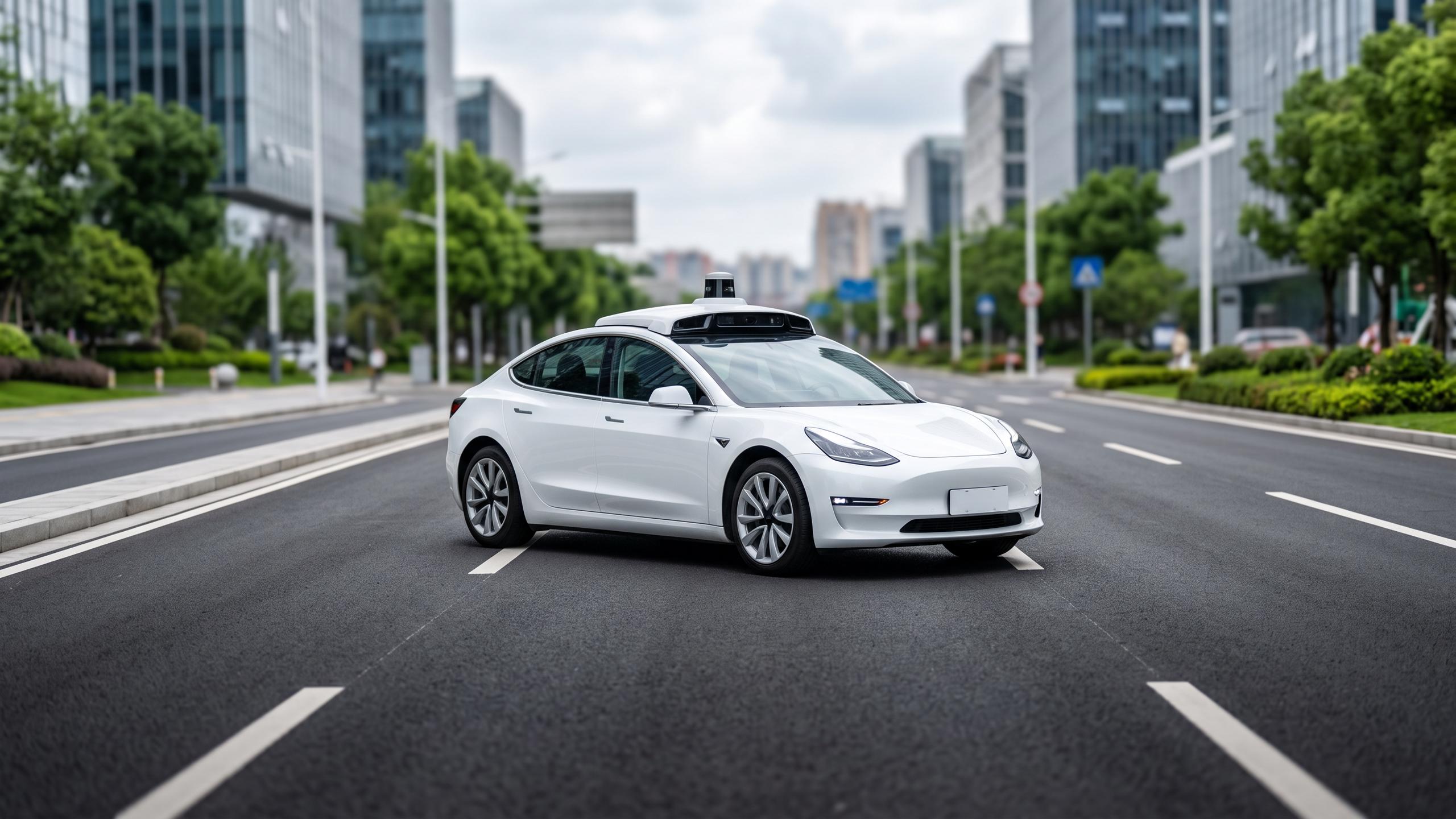
Waymo Pauses Freeway Robotaxi Services Nationwide Amid Regulatory Scrutiny and Safety Concerns

What's Happening?
Waymo, Alphabet's self-driving unit, has paused its robotaxi services on freeways across all its U.S. markets. This decision follows the California Department of Motor Vehicles (DMV) restricting Waymo's
freeway operations in California on November 11, 2026, citing repeated incursions into construction zones. The company had previously stopped freeway driving in May 2026, returning in July after a software update, but incidents continued. Additionally, federal regulators initiated a new probe into robotaxis passing stopped school buses on November 9, 2026. Waymo had issued a software recall in December 2025 for 3,067 vehicles due to this issue, but the National Highway Traffic Safety Administration (NHTSA) opened a recall query because incidents persisted after the fix. Despite these challenges, Waymo continues to operate its paid robotaxi services on surface streets, completing over 500,000 rides per week across 15 U.S. cities.
Why It's Important?
This nationwide pause on freeway operations and increased regulatory scrutiny represent a significant setback for Waymo and the broader autonomous vehicle industry. Freeways are crucial for long-distance travel and airport routes, and their exclusion limits the utility and competitiveness of robotaxi services against human-driven ride-hail options. The recurring issues with construction zones and school buses highlight the persistent challenges autonomous systems face in handling 'edge cases'—unusual or unpredictable situations that require nuanced decision-making. This situation could lead to more stringent regulatory frameworks and a slower pace of expansion for autonomous vehicle companies. It also impacts public trust in the safety and reliability of driverless technology, potentially influencing consumer adoption and investment in the sector. The financial implications are also notable, as Waymo, despite a $126 billion valuation, operates within Alphabet's 'Other Bets' segment, which reported a $2.05 billion operating loss in Q3 2026.
What's Next?
Waymo's immediate focus will be on developing and implementing robust solutions to address the issues that led to the freeway ban and the school bus probe. The company must demonstrate to regulators, particularly the California DMV and NHTSA, that its software and systems can reliably and safely navigate construction zones and respond appropriately to school buses. The lifting of the freeway restriction in California will be a critical benchmark for Waymo's progress. Concurrently, Waymo is expanding its fleet with new vehicles like the Ojai (from Zeekr) and the Hyundai Ioniq 5, aiming to lower operational costs and scale its services. The company's ability to achieve profitability and demonstrate a clear path to margins will be closely watched by investors. Future regulatory updates and the performance of its expanded fleet will determine the pace of its recovery and future growth in the U.S. and international markets.
Beyond the Headlines
The challenges faced by Waymo underscore a fundamental tension in the development of artificial intelligence for real-world applications: the gap between controlled environment performance and the unpredictable nature of public roads. The 'edge cases' of construction zones and school buses reveal that even with extensive data and advanced sensors, autonomous systems can struggle with dynamic, human-centric scenarios. This situation prompts a deeper discussion about the limitations of current AI models and the need for more sophisticated contextual understanding and adaptive learning. It also highlights the geopolitical risks associated with supply chains, as the Chinese origin of the Ojai vehicle body poses a policy risk given tightening U.S. regulations on connected-vehicle technology from China. The ongoing debate between camera-only systems (like Tesla's) and multi-sensor approaches (like Waymo's) will likely intensify, with regulatory bodies potentially favoring systems that offer greater redundancy and proven safety in diverse conditions.